


Hillclimb Monsters: The Ultimate Expression of Performance
Hillclimb monsters are highly modified, purpose-built racing machines that compete in European hillclimbing – a motorsport where drivers in different defined classes, race individually against the clock to complete a tarmac uphill course. These extraordinary vehicles are defined by immense horsepower, sophisticated engine mapping, anti-lag turbo systems, lightweight construction and some of the most extreme aerodynamic packages seen in motorsport.
Unlike the UK, where production-based cars must comply with relatively restrictive regulations, many European hillclimb championships allow teams and privateers far greater freedom in vehicle development. This has created a breeding ground for innovation, where engineers can push performance to extraordinary levels.
Aerodynamics play a crucial role. Massive front splitters, oversized rear wings and complex underbody designs generate huge amounts of downforce, allowing the cars to maintain incredible cornering speeds on fast closed-road courses. At these speeds, aerodynamic grip often becomes more important than mechanical grip alone.
Power outputs typically range from around 250 horsepower to well over 1,000 horsepower. Many competitors use heavily modified turbocharged engines, while others favour naturally aspirated Judd V8 powerplants renowned for their performance and sound. These machines require the explosive acceleration of a dragster combined with the razor-sharp handling of a racing car, enabling them to tackle tight hairpins, long straights and dramatic changes in elevation.
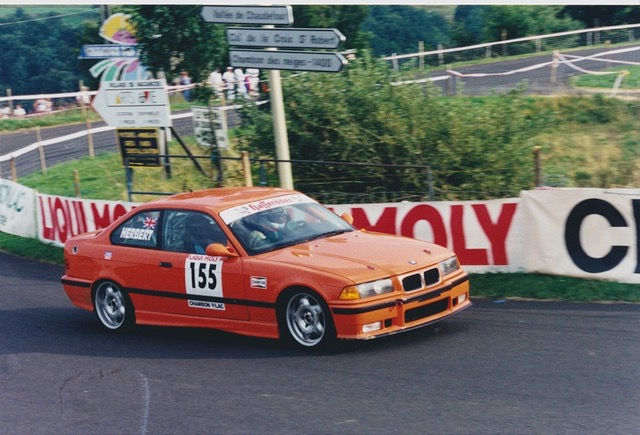
The category encompasses an astonishing variety of vehicles, including tube-frame silhouette touring cars, former Group B rally machines, production-based racers and innovative home-built specials. It is this diversity that makes European hillclimbing so fascinating for competitors and spectators alike.
Hillclimbing in the UK is traditionally held on short private courses, although in recent years a number of dedicated organisers have successfully revived events on closed public roads. Their efforts deserve enormous recognition, as organising road-closing motorsport events in the UK can be a significant challenge due to regulatory requirements.
The following six videos show UK cars launching from the start line at Prescott hillclimb, a private track owned by the Bugatti Owners Club which bought it in 1937. It is 1031 metres long.
Across much of Europe, however, closed-road hillclimbs are often embraced by local authorities and communities. Roads can be closed for entire weekends, with events frequently becoming local festivals featuring fan zones, entertainment and significant economic benefits for the surrounding area.
There is also a notable difference in how the sport is viewed. In the UK, single-seater racing cars are generally regarded as the pinnacle of hillclimbing, competing within a detailed framework of regulations. In continental Europe, production-based "Hillclimb Monsters" occupy that top tier. Known as Category 1 cars, they represent the highest level of a sport that enjoys widespread popularity and support.
The UK system remains divided into numerous classes, many based on regulations developed decades ago. By contrast, the FIA European Hill Climb Championship has been working to modernise competition through the introduction of the Performance Factor (PF) system. Rather than classifying cars solely by engine size or construction type, PF uses a formula to assess a vehicle's overall performance potential. This allows a much wider variety of cars to compete fairly against others with broadly comparable performance levels.
The Performance Factor system represents an important step towards the future of hillclimbing, encouraging innovation while maintaining competitive balance. It is a fascinating subject in its own right and one that deserves a more detailed examination in a future article.
Whether powered by turbocharged four-cylinders, screaming V8s or cutting-edge engineering solutions, Europe's hillclimb monsters remain some of the most spectacular racing cars ever created, machines built with one purpose: to conquer the mountain as quickly as possible.


Comments