


Course de Côte: A Visit to Lorentzweiler, Luxembourg

This year we decided to venture across the Channel to experience some of Europe's famous hillclimbs, known as Course de Côte in French-speaking countries. Our first destination was Lorentzweiler in Luxembourg, an event that returned to the calendar in 2025 after a 13-year absence.
The hillclimb is a round of both the Belgian and Luxembourg championships and attracted a strong international entry, with competitors travelling from Belgium, Luxembourg, Germany, Switzerland and the United Kingdom.

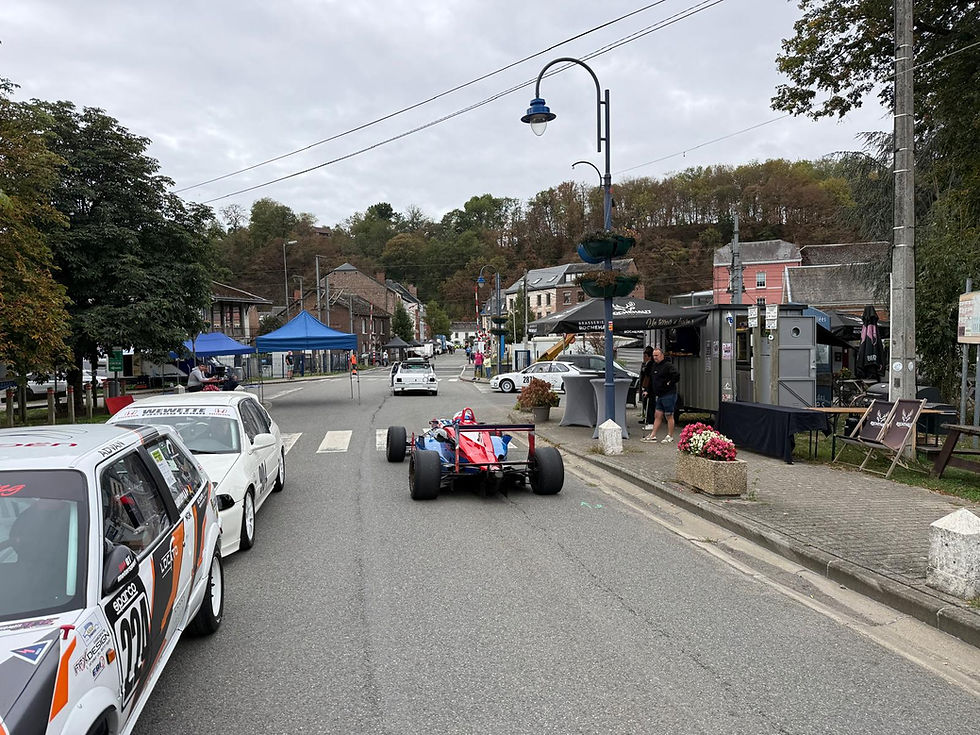
As is common throughout much of mainland Europe, the entry was dominated by "tin-top" cars, known under FIA regulations as Category 1 vehicles. From highly modified hatchbacks to spectacular silhouette specials, the variety and quality of machinery on display was impressive.
The event was run using the FIA's Performance Factor (PF) system. This modern approach assigns each car a unique performance score based on a range of technical criteria entered into the FIA Performance Factor calculator. In simple terms, it is largely based around power-to-weight ratio and allows a wide variety of vehicles to compete on a more level playing field. Cars with broadly similar performance potential are grouped together, regardless of engine size or vehicle type.

One of the major advantages of the PF system is that it makes rule enforcement more straightforward. If a car suddenly performs significantly above expectations, officials have a range of tools available, including random weight checks, ECU downloads to verify rev limits and, in extreme cases, detailed inspections of turbocharger components. Beyond safety requirements, competitors enjoy considerable technical freedom. Tyres are unrestricted, fuel is unrestricted and innovation is encouraged. Many believe this approach represents the future of hillclimbing.

The Lorentzweiler course measures 1,550 metres—around 100 metres longer than Harewood—but what really stands out is its speed. The current record is held by Patrik Zajelsnik in a Nova Proto NP01, who recorded an astonishing average speed of 146.42 km/h on his way to a course record of just 38.109 seconds.
The paddock was centred around the local school, creating a welcoming and community-focused atmosphere. Signing-on and technical scrutineering took place on Saturday, with competitors passing through an impressive marquee tunnel where officials concentrated primarily on safety aspects such as roll cages, harnesses and race equipment.
Sunday's programme consisted of three practice runs in the morning followed by three timed runs in the afternoon. At the conclusion of competition, all cars were placed into parc fermé, allowing time for any protests to be lodged and for post-event inspections to be carried out. The process lasted around ninety minutes and ultimately resulted in two cars being excluded from the final results, demonstrating the seriousness with which the regulations are enforced.

One of the people we met during the weekend was Frazer Alexander, an Alderman for the town and a passionate supporter of the event. He explained that the vast majority of local residents are firmly behind the hillclimb, recognising the benefits it brings to the area. Beyond raising the profile of Lorentzweiler, the event provides a welcome boost for local hotels, restaurants, cafés and shops, while creating a vibrant atmosphere that brings the community together.
Lorentzweiler proved to be a fascinating introduction to European hillclimbing. Fast, professionally organised and strongly supported by both competitors and the local community, it offered an insight into why Course de Côte events remain such an important part of motorsport culture across mainland Europe.


Comments