


Course de Côte Eschdorf, Luxembourg – 2–3 May 2026
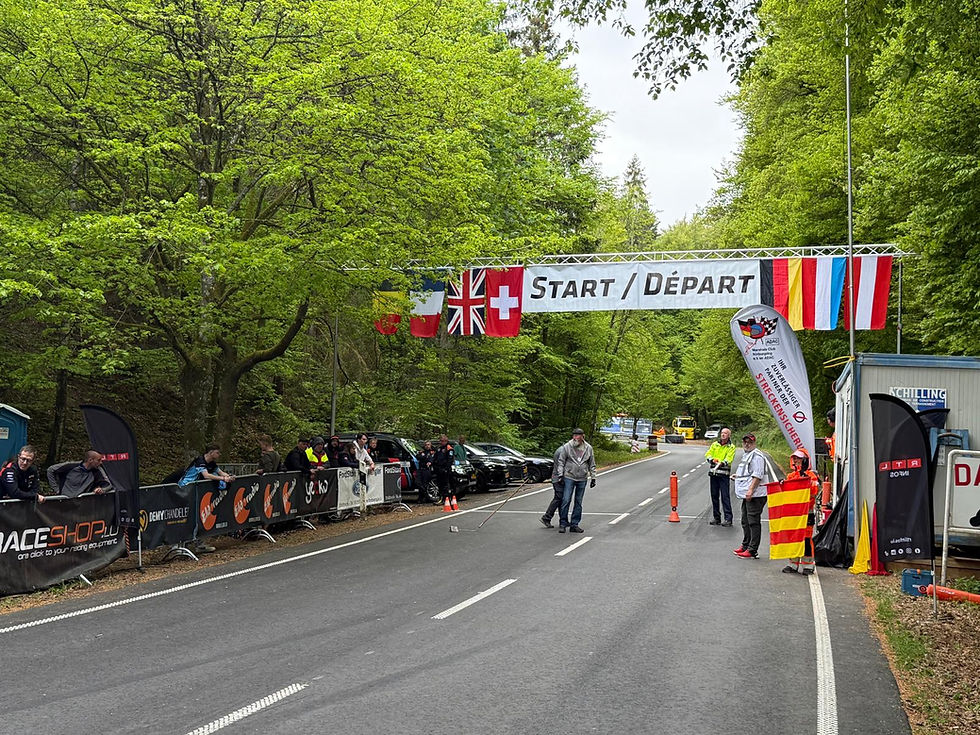
Our second European hillclimb adventure took us once again to Luxembourg, this time to the legendary Course de Côte d'Eschdorf, one of the fastest and most challenging hillclimbs in Europe.

The Eschdorf hillclimb has a long and proud history. First held in 1988, the event ran annually until 2019, establishing itself as a fixture on the Luxembourg motorsport calendar. Following a five-year hiatus, competition returned in 2024, with the 2026 event marking the 34th edition of the hillclimb.

The course itself is truly spectacular. Measuring 1,850 metres in length, it features an elevation gain of 105 metres and an average gradient of 5.6%. More remarkable still is its speed. Eschdorf is widely regarded as one of Europe's quickest hillclimbs, with the fastest cars reaching speeds of up to 235 km/h as they charge between the barriers. The combination of high-speed sections, sweeping curves and changing gradients demands total commitment from drivers and absolute confidence in both car and setup.

Eschdorf's reputation is such that it was selected to host the prestigious FIA Hill Climb Masters in 2014, bringing many of Europe's leading competitors to Luxembourg.

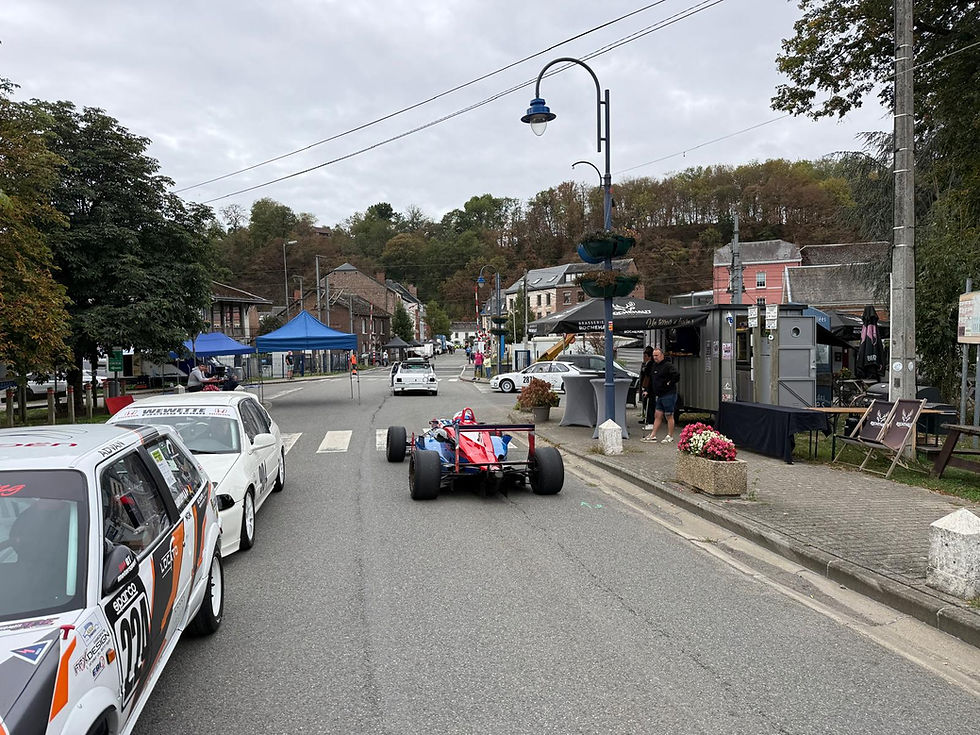
The paddock was spread throughout the roads surrounding the town, creating a close connection between the event and the local community. Competitors signed on at the local school, which once again served as the hub of the event. Technical scrutineering took place on Friday, followed by three practice runs on Saturday. Competition runs were scheduled for Sunday.
Sadly, the weekend was overshadowed by tragedy.
During the first competition run on Sunday morning, an incident occurred in which a marshal—a local volunteer supporting the event—lost their life. The motorsport community relies heavily on the dedication and commitment of volunteer marshals, whose work makes events such as these possible. Following the accident, the organisers made the understandable decision to stop the event.
In moments like these, competition becomes secondary. Our thoughts are with the marshal's family, friends and fellow volunteers, as well as everyone involved in the event. The hillclimbing community across Europe is a close-knit one, and the loss was felt deeply by competitors, officials, organisers and spectators alike.
While Eschdorf remains one of Europe's great hillclimbs, the 2026 event will inevitably be remembered not for the competition itself, but for the tragic circumstances that brought the weekend to an early conclusion and for the volunteer who gave their time to support a sport they loved.


Comments