


Peter Herbert - A Life On The Hills 3
PART THREE — Peter Herbert: Why We Keep Coming Back
Cars change. Times get faster. But some things about hillclimbing endure.
Across the first two parts of our interview with Peter Herbert, we’ve followed a motorsport life spanning more than half a century from his earliest fascination with cars and the beginnings of his competition career to the extraordinary experience of taking on the European Hillclimb Championship.
For the final part, we bring the story back to the hills Peter knows so well.
Having watched British hillclimbing evolve over almost four decades, Peter reflects on what has changed, what has remained reassuringly familiar and why the camaraderie of the paddock continues to be such an important part of the sport.
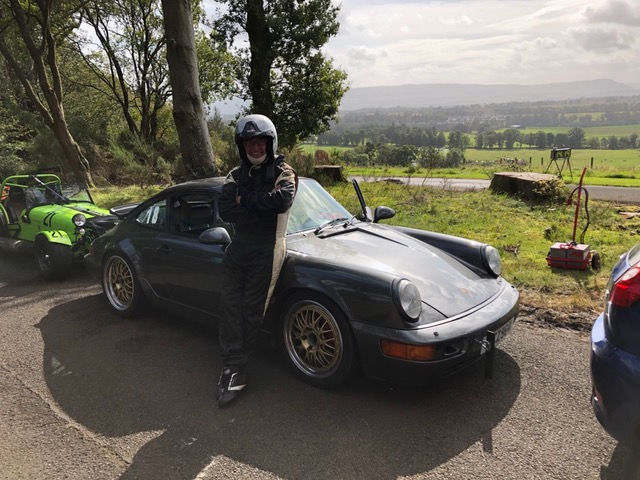
He also looks back on 14 years competing in his much-loved Porsche 911, explains why outright speed has never been the main attraction, and talks about the new chapter he has begun with his Alpine A110.
Finally, we ask Peter what it feels like to pull up to a hillclimb start line after all these years and discover that while experience may have changed the driver, the thrill most certainly hasn’t disappeared.

You’ve seen hillclimbing change enormously over the decades. If you could put the sport you first knew alongside hillclimbing today, what do you think has genuinely improved and is there anything from those earlier years that you feel we’ve lost along the way?
When I began hillclimbing almost forty years ago only a car and a helmet were required. Now a driver is required to wear a helmet, race suit and gloves, frequently a HANS device to guard against neck injuries, while fireproof boots, socks and balaclava may well soon be mandatory. This I understand and accept, though perhaps financially prohibitive to newcomers. What I regret is the necessity to be so protected when driving anywhere outside the paddock, and in particular while returning at low speed from the top of the hill when officials without any protection merrily bat up and down the course all day. I think this to be totally disproportionate to any risk involved.
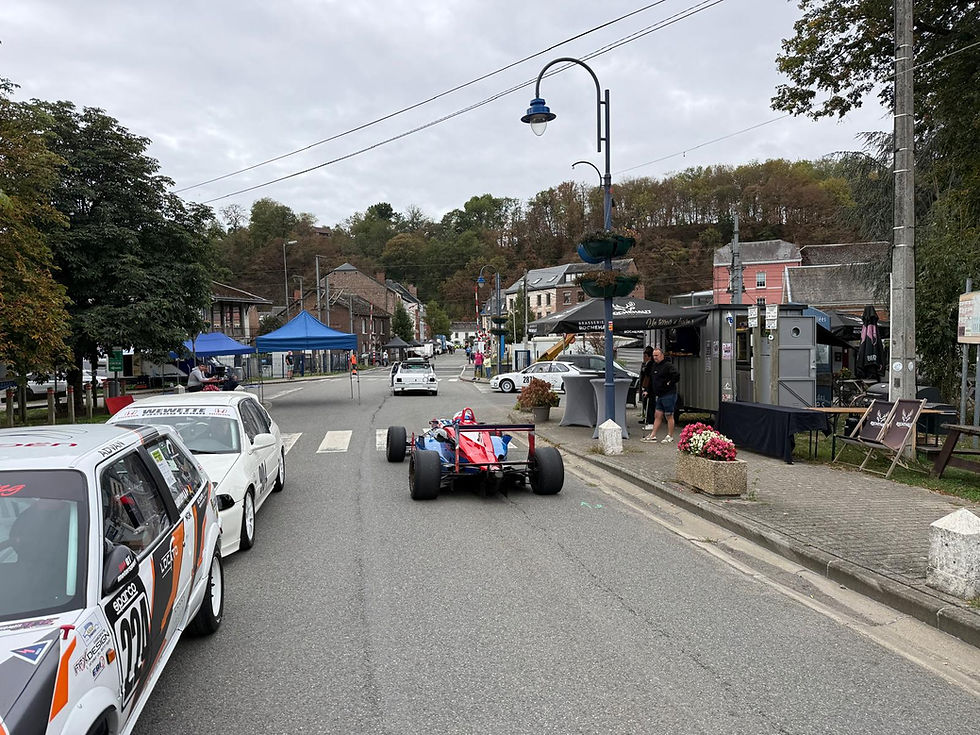
In other respects speed hillclimbing has changed little. The tracks remain essentially the same, as indeed do many of the people, though the cars have of course got much quicker. Younger people are entering the sport bringing new blood, yet there are still drivers who were around when I first started. Indeed it is the rich mixture of participants and the camaraderie of a shared paddock that makes the sport such a joy.

This was not something I always experienced during my four years of circuit racing. Here egos were more on display, animosities would brew between those competing for the same piece of tarmac, and the bleak expanse of former airfields such as Snetterton and Croft were no match for the rustic splendour of a Prescott or Shelsley.
So, in summary, I don’t believe hillclimbing to have lost anything over the years, and its current popularity is heartening.
Your Porsche 911 has become almost as much a part of your hillclimbing story as you have. You originally bought it as a road car and even contemplated retiring before deciding to compete in it. What is it about that particular car that has kept you developing it and competing with it for so long, rather than chasing something newer or faster?

My very first car was a VW Beetle, so inevitably I dreamt of one day owning its spiritual successor, a Porsche 911. Mine was bought as a weekend fun car with no thoughts of racing it. But when my Westfield’s engine blew up, for the second time, I decided to cut my losses, sell the car and hang up my helmet. Retirement lasted for approximately a week. So I entered the 911 for a club event at Harewood, and to my surprise, despite the car feeling somewhat wayward on track, I won my class and broke the class record, though it has to be said it was a soft target.
Thereafter the car was steadily developed with the help of Simon Dawes of QSP in Ferryhill and campaigned throughout the country. Older air- cooled Porsches have wonderful character. They are not the easiest to drive due to the weight of a rear engine, but we had our moments together and became part of the national Porsche hillclimbing scene.
However, old Porsches are high maintenance and not inexpensive to run, and when driving some distance to and from events reliability is a concern. So after 14 years of competition I sold the car, and am now well into my first season with a far newer Alpine A110, a car that is admired almost as much as the 911.
As for opting for something faster, that doesn’t really interest me. Getting the best out of what I have is what matters. There will always be faster cars and quicker drivers, but being there, driving against the clock and mixing with like minded people is, at least for me, enough.
After more than half a century in motorsport, you’re still putting on a helmet and driving up a hill against the clock. When you're sitting on the start line now, does the feeling differ from when you were a young competitor or, underneath everything you've learned and experienced, is the thrill essentially still the same?
That’s a very interesting question, and something I’ve not really considered before.
When I began hillclimbing nerves were always an issue, as was of course also the case at the start of a rally or on the grid at Silverstone. But gradually I leant to relax a little and my performances improved as a result. Yet a degree of trepidation is not a bad thing, as to become blasé about a potentially hazardous form of motor racing on courses that offer little in the way of margin for error would be unwise.
But the thrill has always remained the same. Pulling up to the startline in front of an ‘adoring’ crowd, tightening the belts, getting off the line cleanly, holding optimum lines through corners, late braking then early acceleration, before seeing a time on the clock. And when that time exceeds expectations it’s usually a result of making less mistakes rather than some act of genius. That much I have learned.
For me hillclimbing has become a way of life, and although I have other interests and have no wish to race every weekend, this absorbing sport is compulsive. I still get a buzz from the first sight of an entry list and seeing who will be there, the ritual of packing my kit and loading the car, the journey to and from a venue, those early morning breakfasts at a farmhouse B&B ahead of scrutineering, and evening meals with fellow drivers who have become chums. And when old age and senility forces me to stop I’ll miss all this terribly.



Comments